


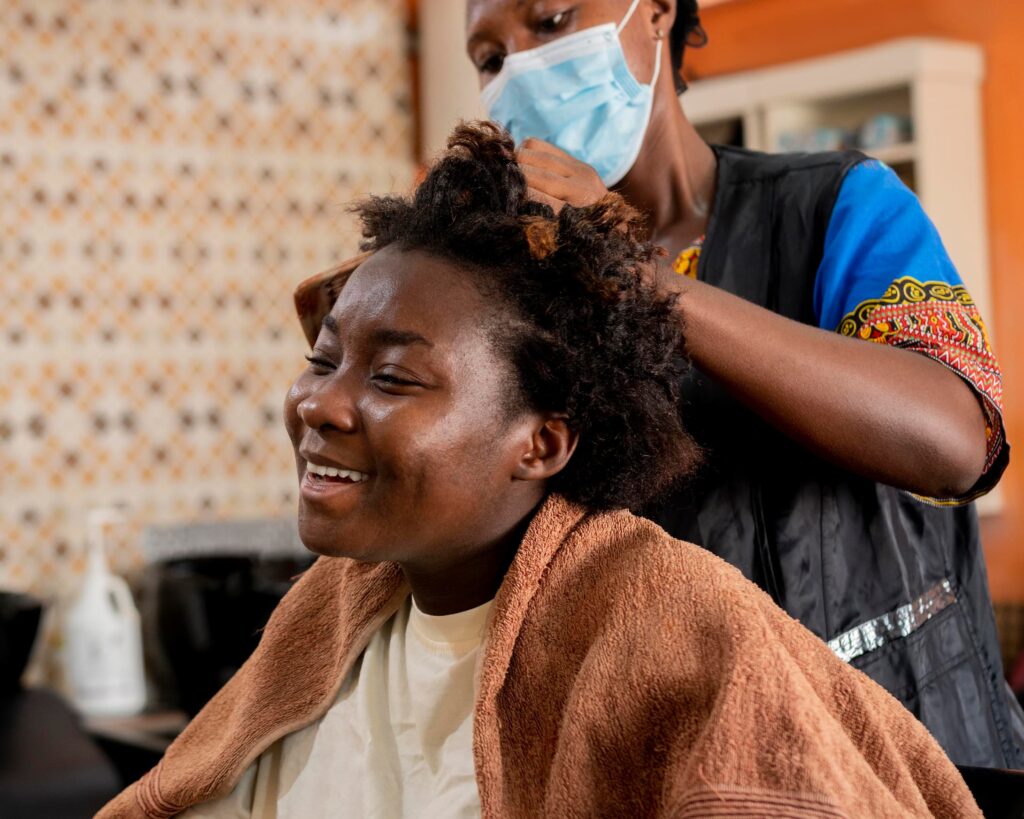
It’s raining in Abuja. The roads are flooded, traffic is a nightmare, and your appointment book has a few more gaps than you’d like. If you run a salon, a nail studio, or a makeup business, you know this feeling well. The rainy season, which runs from June through September in the FCT, has a reputation for slowing things down.
But here’s the thing most beauty business owners miss: the clients who still show up in the rain? They are your most valuable clients. They didn’t cancel because of a bit of weather. They planned ahead, left early, and made the effort. That tells you everything you need to know about how much they value you.
The rainy season isn’t just a slow period to survive. Handled well, it’s the best opportunity of the year to deepen client relationships, improve your systems, and build the kind of loyalty that keeps your calendar full long after the rains have cleared.
The Rain Filters Your Client List, and That’s Useful
During the dry season and peak periods, your salon is busy. New faces, one-time bookings, clients trying you out after a referral, it’s all flowing. That’s great for revenue, but it also means you don’t always know who your real regulars are.
The rainy season changes that. The clients who continue to book consistently through June, July, and August, despite the traffic in Gwarinpa, the waterlogging around Kubwa, and the chaotic roads near Wuse Market, are signalling something. They’ve made your salon a non-negotiable part of their routine. Not a treat. A standing appointment.
That’s the foundation of a loyal client base, and this is the time to recognise it and act on it. As research consistently shows, repeat clients are far more valuable than one-time visitors, not just because they return, but because they refer others and tend to spend more per visit.
Use the Slower Days to Focus on Retention
A quieter calendar doesn’t mean wasted time. It means you have breathing room to do the things that sustain your business long-term, and chief among those is building client relationships. Research from Bain & Company shows that even a 5% increase in customer retention can lead to a 25-95% increase in profits. For a beauty business, that’s not an abstract statistic. It’s the difference between a full calendar year-round and a business that only thrives during peak season.
So what does retention actually look like in practice for a beauty business in Abuja? It starts with the basics:
- Following up with clients after their appointment – a simple WhatsApp message or automated reminder asking if they’re happy with their service goes a long way
- Recognising regulars when they come in – knowing their name, remembering their preferred style, noting what they’ve tried before
- Sending personalised rebooking reminders before their usual appointment window, so they book with you before they think to look elsewhere
- Keeping your communication consistent even during slow weeks, a check-in, a promotion, a useful tiP, so you stay top of mind
None of this requires a big budget. Most of it can be automated through a platform like Glown, which means it happens consistently whether you’re in the middle of a busy Saturday or a rainy Wednesday with half your usual bookings.
Rainy Season Is the Right Time to Introduce a Booking Fee
If you’ve been hesitant to start collecting upfront booking fees, the rainy season is the ideal moment to make the switch, and here’s why.
During slower periods, every no-show costs more. When your calendar is already lighter than usual, an empty slot is not just inconvenient; it’s a real revenue hit. Hair salons typically see no-show rates of around 15%, and that figure tends to rise during bad weather when clients are more likely to cancel at the last minute or simply not show up.
Introducing a small booking deposit changes the dynamic entirely. Clients who have paid something, even a partial amount, are significantly more likely to show up or to cancel with enough notice for you to rebook the slot. It also sends a clear message about how you operate: professionally, with clear expectations on both sides.
The clients who push back hard on a booking fee are often the same ones most likely to ghost you on a rainy Tuesday. The ones who book and pay upfront are the ones who value your time. The rainy season will help you tell the difference very quickly.
If you want a full breakdown of how to implement this without damaging client relationships, our post on how to reduce no-shows covers exactly that.
Slow Periods Are When Your Systems Should Be Working Harder
One of the most common mistakes beauty business owners make during quiet months is going quiet themselves. But this is precisely the time to let your systems do the heavy lifting, automated reminders, follow-up messages, and rebooking nudges, so that when the rain stops and demand picks back up, your calendar is already filling. Studies show that SMS reminders alone can increase appointment attendance by up to 50%, which means even a modest investment in automation pays for itself quickly.
Beyond reminders, the rainy season is also a good time to look at your data. Which services are still being booked consistently? Which clients haven’t been in for six weeks or more? Which days of the week hold up best versus which days collapse completely when it rains?
These are exactly the kinds of questions that Glown’s analytics dashboard is built to answer. Understanding your patterns during a slow period gives you a clear picture of where your business is genuinely strong and where it depends too heavily on conditions being perfect.
Give Your Loyal Clients a Reason to Keep Coming Back
Rainy season is also the right time to think about what you’re offering your most consistent clients, not in terms of discounts or giveaways, but in terms of experience and recognition.
Small gestures go a long way. A client who has been coming to you every three weeks for six months deserves to feel like a regular, not like a stranger walking in for the first time. Knowing their name, remembering their last service, asking how a previous recommendation worked out, these things cost you nothing but create a sense of belonging that no competitor can easily replicate.
Beyond personal touches, consider whether your current systems make it easy for loyal clients to rebook quickly, receive timely reminders, and stay in the loop when you have availability. The smoother and more consistent their experience, the more likely they are to refer you to friends, and in Abuja, word of mouth is still one of the most powerful marketing tools a beauty business has.
If you’re thinking about how to structure this more formally, our post on how to use analytics to grow your salon revenue walks through how to identify your highest-value clients using your booking data, which is the first step to building a loyalty strategy that actually works.
What the Rain Is Actually Telling You
By the time September arrives and the rains ease off, you’ll have had four months of data that tells you more about your business than any dry-season period could. You’ll know which clients are genuinely loyal. You’ll know which services hold up regardless of the weather. You’ll know whether your booking and reminder systems are working, and where they’re letting you down.

The beauty businesses that come out of the rainy season stronger are not the ones that simply waited for it to end. They’re the ones that used it intentionally, to tighten their operations, deepen their client relationships, and set themselves up for a strong Q4. Abuja’s beauty industry is competitive. The gap between a salon that’s always full and one that struggles in slow periods often comes down to exactly this: what you did during the months when showing up was harder.
Sign up on Glown today
No comments yet