


Let’s talk about the number that’s costing you the most money in your business right now.
It’s not your rent. It’s not your product spend. It’s not even the clients who cancel last minute.
It’s the price on your service menu, the one you set months ago and haven’t touched since.
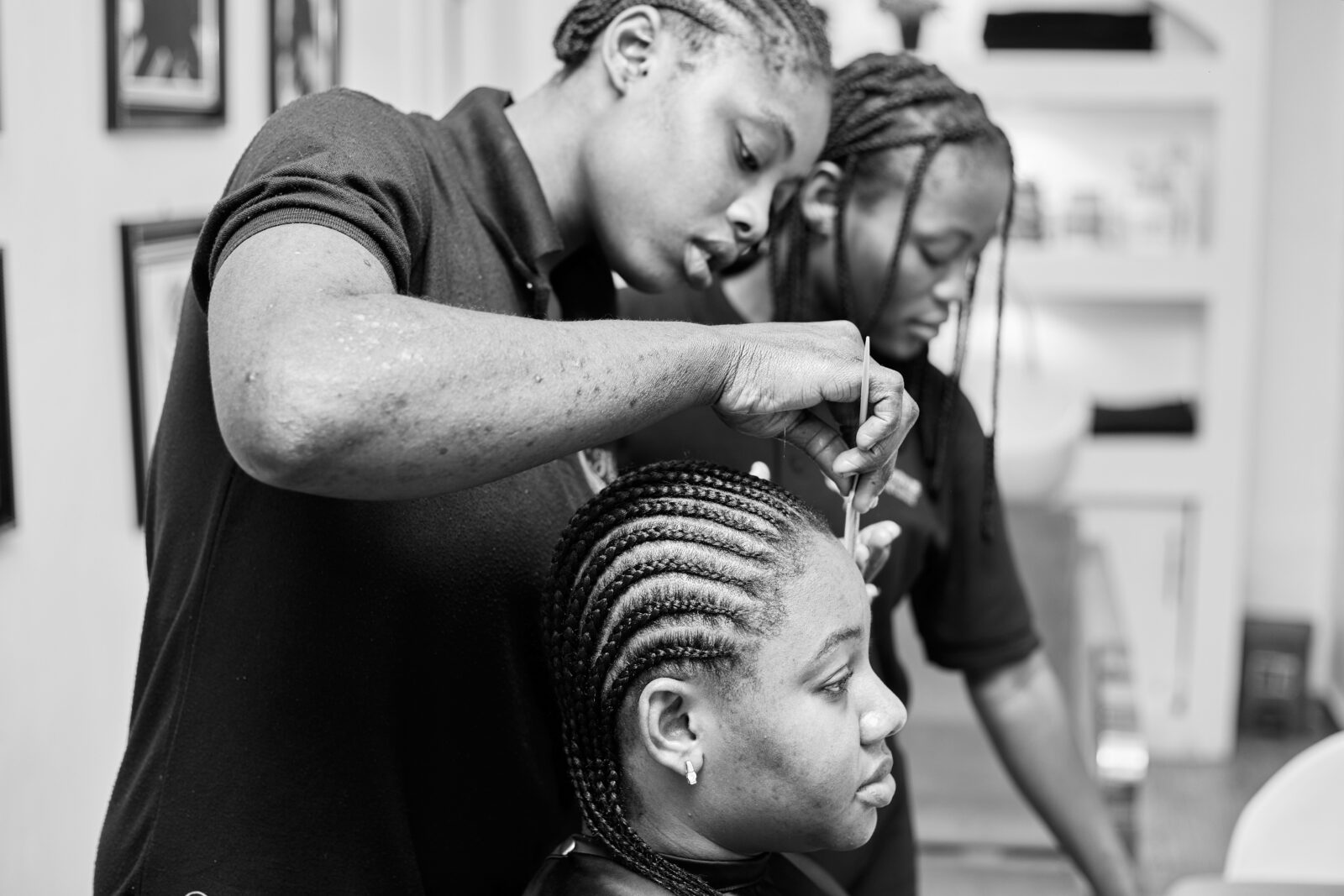
Here’s what happens every week in salons across Abuja: a skilled stylist, nail tech, or makeup artist is fully booked. She’s turning people away. She’s building a real reputation. But at the end of the month, her numbers don’t come close to matching the work she’s putting in.
The problem isn’t how hard she’s working. It’s what she’s charging.
Underpricing is one of the most common and most expensive mistakes in the Nigerian beauty industry. And the longer you wait to fix it, the more it costs you. According to Square’s 2025 Future of Beauty report, 71% of beauty business owners globally plan to raise their prices this year. The industry is catching up to a reality that many individual practitioners in Abuja haven’t faced yet.
This post will show you exactly how to know when the time is right, how to calculate what to charge, and how to communicate the change without losing the clients you’ve worked hard to build.
5 Signs It’s Time to Raise Your Prices
Not every beauty business needs a price increase today. But most do. Here are the clearest signals that your pricing has fallen behind your value.
1. Your calendar is consistently more than 80% full
When demand outpaces your availability, that’s a market signal. Industry guidance consistently points to 80-90% booking capacity as the benchmark for when a price increase is not only justified but overdue. If you’re turning people away at your current prices, you could charge more and still be fully booked.
2. You haven’t raised your prices in over 12 months
Your rent didn’t stay the same. Your products didn’t stay the same. Your electricity bill, your transport costs, your data, none of it stayed the same. If your prices haven’t moved with your costs, your actual margins are shrinking every single month, even when your revenue looks steady.
3. You’re attracting clients who haggle or ghost
Underpriced services attract price-sensitive clients, the ones who are first to cancel when something comes up, hardest to retain long-term, and least likely to refer anyone. A higher price point naturally filters your client base toward people who genuinely value your work.
4. You feel resentful of doing certain services
If you dread a particular appointment because it takes too long for what you’re being paid, that’s a pricing problem, not a client problem. When the numbers don’t reflect the effort, the work suffers. Fix the price, not your attitude toward the work.
5. New clients accept your prices without hesitation
If nobody ever flinches, it’s usually a sign you’re sitting below market rate for your skill level and location. Some friction in the price conversation is normal. None at all usually means you’re underselling yourself.
How to Calculate the Right Price Increase
The most common mistake beauty business owners make when raising prices is choosing a number based on feeling rather than data.
Too small, and it doesn’t solve the problem. Too large, and it creates friction you don’t need.
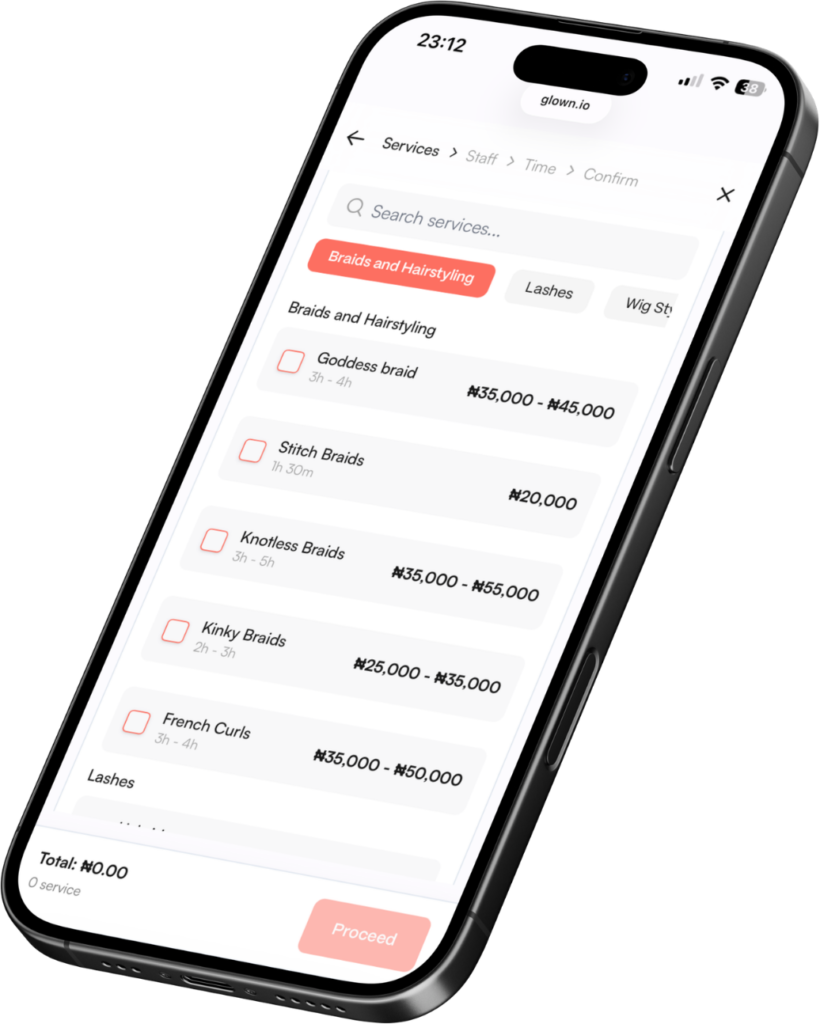
Research suggests that most salons increase prices successfully in the 10-20% range, tied to actual cost increases and demand, not arbitrary round numbers. A 3% increase on a ₦15,000 service is ₦450. That won’t cover your rising product costs. A 15% increase on the same service brings it to ₦17,250. That’s meaningful for your business without being shocking for clients.
Here’s how to work out your number:
- List every cost that has increased since your last price review: products, rent, electricity, transportation, data subscriptions.
- Calculate your average revenue per service and compare it against the actual time each service takes, including setup and cleanup.
- Research what other skilled practitioners in your area are charging. Look at salons operating at a similar level in Maitama, Wuse 2, Jabi, and Gwarinpa. That’s your market rate benchmark.
- Identify your two or three highest-demand services; those are the ones to increase first, because they’re the ones clients will absorb most easily.
If you’re using a booking platform that shows your revenue per service, your busiest slots, and your most consistent clients, you’re not guessing; you’re making a data-backed decision. Use that data before you set a number.

The Clients You’re Afraid of Losing Are Not Always the Ones Worth Keeping
This is the part most beauty business owners don’t want to hear. A price increase will almost certainly cause some clients to leave.
And that’s not a disaster. It’s a filter.
Research from Phorest found that price is rarely the primary reason clients leave a salon. The bigger factors are service quality, the relationship with the stylist, and convenience. Clients who genuinely value your work will stay. The ones who leave over a ₦2,000 increase were almost certainly not your best clients to begin with.
Think about who books the ₦20,000 makeup session. They arrive expecting excellence. They respect the process. They refer their friends. Now think about the client who booked you because you were the cheapest option they found. Which one would you rather build your business around?
A price increase, done well, is not a risk to your business. It’s an investment in the quality of your client base.
How to Communicate a Price Increase Without Losing Trust
How you tell clients matters as much as the increase itself. The businesses that handle this poorly either say nothing at all, leaving clients to discover the change at checkout, or over-apologise in a way that signals uncertainty and invites pushback.
Give at least four to six weeks’ notice
A heads-up shows respect. It also gives loyal clients the option to book before the increase takes effect, which typically creates a short-term spike in bookings, a revenue boost you get just for communicating well.
Keep the message direct and confident
A WhatsApp message to your regulars, a post on your Instagram or WhatsApp status, and an updated booking page are all you need. You don’t need a long explanation. You need a clear, professional notice.
Frame it around value, not apology
“I’ve updated my service prices to reflect my growing skills and the cost of the premium products I use.” That’s very different from: “I’m so sorry, but I have to increase my prices.” One signals confidence. The other invites negotiation. Choose confidence.
Increase your most popular services first
A phased approach, adjusting your two or three key services now and reviewing the rest in six months, is easier to absorb for both you and your clients. It also lets you test the response before applying increases across your full menu.
Add a small touch of value at the same time
A complimentary scalp massage during a wash, a product sample at checkout, or a more thorough consultation experience can make clients feel the increase is justified, without any high cost to you.
Research backs this up: 83% of salon clients continue using a business after a price increase when the communication is handled well. The fear of losing clients is almost always worse than the reality.
After the Increase: What to Watch For
Once your new prices are live, resist the urge to draw conclusions in the first two weeks. Give yourself 60 days to assess properly. During that period, monitor:
- Rebooking rate: Are your existing clients still scheduling their next appointment before they leave?
- New client conversion: Are enquiries still converting, or are you seeing more drop-off at the booking stage?
- Revenue per service: Is your actual take-home per appointment improving, or did volume drop enough to offset the gain?
If your most loyal regulars are still booking consistently at 60 days, that’s the clearest signal you got the increase right. And if the clients who left were the same ones most likely to cancel or no-show, that’s not a loss. That’s your business getting healthier.
Frequently Asked Questions
When should I raise my salon prices in Nigeria?
Raise your prices when your booking calendar is consistently 80% or more full, when your costs have increased, but your prices haven’t moved, or when you haven’t reviewed your pricing in over 12 months. Any one of these is enough reason. If all three apply, it’s overdue.
How much should I increase my beauty service prices?
Most salons raise prices successfully by 10-20%, tied to actual cost increases and client demand. A 15% increase on a ₦15,000 service brings it to ₦17,250 – meaningful for your bottom line without being a shock to clients.
How do I tell my clients I’m raising my prices?
Give four to six weeks’ notice. Send a direct message to your regular clients on WhatsApp, post on your Instagram or WhatsApp status, and update your booking page. Frame the message around the value you deliver, not an apology.
Will I lose clients if I raise my prices?
Some, possibly. But research shows 83% of salon clients continue with a business after a price increase when communication is handled well. Clients who leave over a small increase were typically the most price-sensitive and least loyal.
What’s the best way to calculate my new prices?
List every cost that has increased since your last price review. Calculate your average revenue per service relative to the time it takes. Check what comparable practitioners in your area are charging. Set your increase between 10% and 20%, starting with your highest-demand services first.
Your Prices Should Reflect What You’ve Built
Every beauty professional reading this has put real time, money, and energy into getting better at their craft. The training, the tools, the products, the hours of practice, none of that was free. Your prices should reflect that investment, and they should grow as your skill and reputation grow.
The beauty businesses in Abuja building something sustainable, not just staying busy, but actually growing revenue, are the ones that treat pricing as a business decision, not an emotional one. They review their prices regularly. They raise them with confidence. And they use their data to back up every move they make.
If you haven’t looked at your prices in the last 12 months, that review starts today.
Want to see exactly where your revenue per service stands before your next price review? Glown’s analytics dashboard shows you your busiest services, most loyal clients, and earnings per appointment, so your next pricing decision is backed by real data, not guesswork.
1 comment